
This write up will analyze India’s strategic assessment, foreign policy, and strategic decision with regard to various developments of recent times – Afghanistan, Pakistan, US-China relations, United Nations, Tariff Wars, India-US relations, and India-Russia-China relations.
Afghanistan:
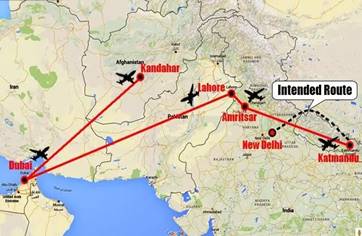
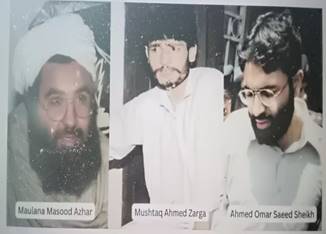
After a period of quarter century, India-Afghanistan relations are now witnessing a reproachment. Experts in India believe this is a major shift in India’s strategic thinking and foreign policy. While India was always interested in keeping close ties with Afghanistan, it had major difference of opinion with the Taliban’s. The hijacking of IC 814 – bound from Kathmandu to Delhi, was hijacked as soon as it entered Indian airspace on December 24, 1999 – created major embarrassment and humiliation for India’s security agencies and diplomats who had to release three Pakistani terrorists [Ahmed Omar Saeed Sheikh, Masood Azhar, and Mushtaq Ahmed Zargar] from India jails for securing the release of the 191 souls onboard. India has not forgotten this incident and in many ways this incident remains part of India’s collective consciousness. No nation helped India during this crisis.
| Across South Asia, New Delhi has been recalibrating its diplomacy — engaging whoever holds power, including the Islamist-leaning regimes in Bangladesh and the Maldives and Myanmar’s military junta. In Afghanistan, India will have to walk a fine line: supporting the rights and aspirations of the Afghan people while engaging the Taliban to ensure the country does not again become a sanctuary for anti-India terrorism. |
After the terror attacks in the United States after September 11 (2001), India security agencies have directly involved themselves in the civil war in Afghanistan and supported the Northern Alliance against the Taliban. And since have supported the Afghanistan in its national development. India’s stance against Taliban in this regard is a very important development, and underscores the fact that the situation has now completely shifted. According to Brahma Chellaney – Engagement gives India leverage, intelligence and access — tools indispensable for managing the crosscurrents of regional security.
India’s approach towards has always been to allow Afghanistan to resolve their issues themselves and has called for no serious intervention in their internal matters because Afghanistan is very diverse and works on the basis of Tribal codes. If India was to support one tribe against the other, it shall come out well for India’s position. India today holds a very positive image. For example, when Pakistan journalist travels in Afghanistan, while crossing the check-post they use the false identity of being an Indian. Unlike India, other powers such as Pakistan, China, the US intervene in Afghanistan by supporting the Pashtuns – the largest ethnic group. It is impossible to govern Afghanistan without the Pashtuns. And, Pasthuns’ live along the boundary line separating Pakistan and Afghanistan in denial to the Durand Line. Afghanistan has never recognized the Durand line between Afghanistan and Pakistan. This is at the heart of the ongoing tension between Pakistan and Afghanistan. Taliban – religious scholars – are predominantly belong to the Pashtun ethnic group. But, have now made in ways into other ethnic groups too. It was these Taliban’s’ trained in the Madrassas (religious schools) of Pakistan that were promoted to fight against the Soviet invasion under General Zia’s rule in Pakistan. From this point onwards Pakistan became a very radicalized society and this is perhaps the reason for the situation Pakistan today finds itself in.
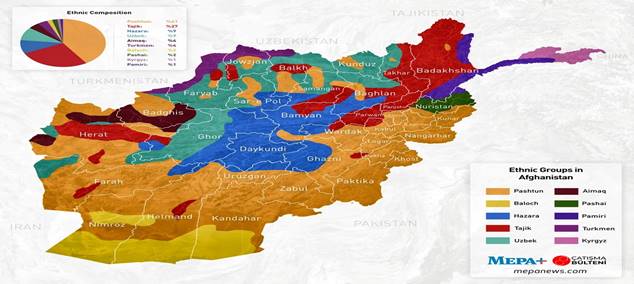
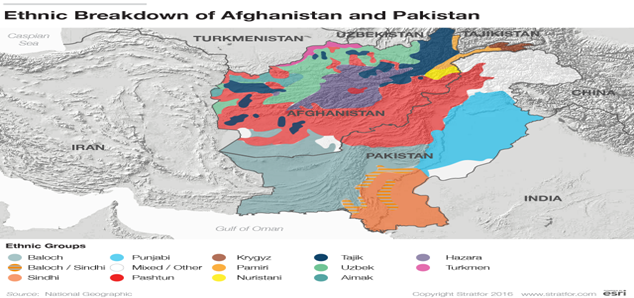
There was a time when Pakistan used to treat the Afghanistan as a brother in arms, but this was not a real intention of Pakistani. In fact, Pakistan has always used Afghanistan for its own purpose. From a strategic perspective, Pakistan has seen Afghanistan as a “Strategic Depth” in its security needs with respect to India. The biggest problem for Pakistan in its confrontation with India is that it does not have strategic depth and India’s military strategy against Pakistan is to cut Pakistan into two during its initial military operations. Pakistan always wants an Afghanistan government that is anti-India in its orientation. Any India-Afghanistan partnership is seen as a threat in Pakistan. Pakistan will do its best to create instability within Afghanistan, if it evaluates the India-Afghanistan partnership getting strong.
According to former Indian Ambassador Muthu Kumar to Afghanistan, Pakistan is no longer in a situation to influence the Afghan Taliban both due to its economic situation and also the perception of the Taliban now holds for Pakistan. Taliban, in fact is no longer a stooge for any anyone. He further adds, Indian model for technical economic cooperation is good but it is very weak in comparison to, say, Turkey which also uses an Indian model – low visible people-oriented assistance – is comparatively much more effective when compared to India. China’s assistance is more or less a business transactional model. Importance of Afghanistan is also because of its huge natural resources – Gold, oil and natural gas. [vast untapped reserves of lithium, copper and rare earths]
| India has long been among Afghanistan’s leading development partners. It has invested billions of dollars in infrastructure, education and health projects — from the Salma Dam and the Afghan Parliament building to the Indira Gandhi Children’s Hospital in Kabul. These investments won India enduring goodwill among Afghans and embodied its soft-power approach to regional influence. |
Since 2021, many of India’s ongoing development projects that benefit ordinary people of Afghanistan, as against the ruling Taliban, were stalled. India’s re-engagement and return of diplomats is likely to see re-starting of these stalled projects. It is now clear that India’s decision may have come after Taliban has ensured the safety of Indian embassy and staff in Afghanistan. Previously the Indian embassy has been targeted by terror groups based in Pakistan.
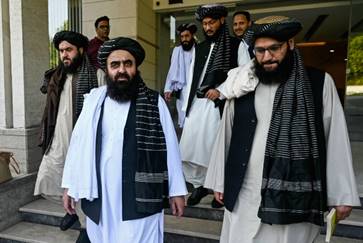
Afghan Foreign Minister Amir Khan Muttaqi (center) leaves after attending a news conference at the Embassy of Afghanistan in New Delhi on Oct. 12.
Recently Afghanistan Foreign Minister Muttaqi visited India after the UN lifted the ban on him to travel to India, this was a major development especially following brief armed conflict between India and Pakistan and Afghanistan and Pakistan.
India also reopened its embassy on 21 October in Kabul and it is expected that other democracies such as Japan and the US may follow to recognize Afghanistan. Many believe this is a strategic and pragmatic decision in lieu of the fact the US is aiming to reestablish itself at the Bagram Airforce base. There are reports that suggest Indian Airforce has been delivery construction personnel and material to help reconstruction of the Bagram Airbase. The Taliban, meanwhile, are resisting U.S. President Donald Trump’s pressure to let America reclaim Bagram Airbase, which served as the nerve center of America’s 20-year war in Afghanistan. On Sept. 20, Trump warned that “bad things” would happen to Afghanistan if it did not return control of Bagram to the United States [Brahma Chellaney].
| President Trump has said it was a mistake for the U.S. military to leave Bagram Air Base. “One of the reasons we want the base is, as you know, it’s an hour away from where China makes its nuclear weapons,” Mr. Trump said in London this month, without offering details about how the U.S. would control it, now that the U.S. military is out of Afghanistan. In an interview with Fox News in late 2021, Mr. Trump also expressed concern that China would “take over Bagram .” |
| India has maintained relations with the Taliban ever since it seized power in Kabul four years ago. But a series of regional developments has led to the unprecedented change in India’s policy toward the Taliban we are seeing today. The military conflict between India and Pakistan earlier this year, China’s active and growing support for Pakistan, Russia’s lukewarm response to that war despite its historical defense ties to India, and Washington’s recent embrace of Pakistan have created a sense of unease and claustrophobia in Delhi. [Happymon Jacob, Shivnadar University] |
Conclusion:
India’s “NEIGHBORHOOD FIRST POLICY” has more or less failed with events in Srilanka, Pakistan, Bangladesh, Nepal, Myanmar, Maldives steering away from normalcy and stability. India lacks in resources, and in vision in providing stability in the region. The situation is also allowing foreign major powers – the US, China and Russia to play more decisive role in the region.
By re-engaging Taliban is a risky policy as the Taliban is committed to practice Islamic (Sharia) law, and this is certainly not in the regions interest and India. The entire Sunni Shia population in India’s immediate neighborhood is nothing less than sitting on a time bomb. India has to engage, but also remain cautious with the shift in its policy towards Afghanistan. India’s pragmatic policy, is perhaps the need of the hour.
